In April, I attended American Mensa’s Mind Games for my tenth (10th!!!) time. It’s a fantastic weekend of playing so many board games with people I’ve known for a long time and people I’m just getting to know. It’s a very intense time for both my brain and for “peopling”. This year, it was in DC, and, as has become more common, it started on Thursday instead of Friday, which meant we had about 60 hours to play games instead of 36+.
The Structure
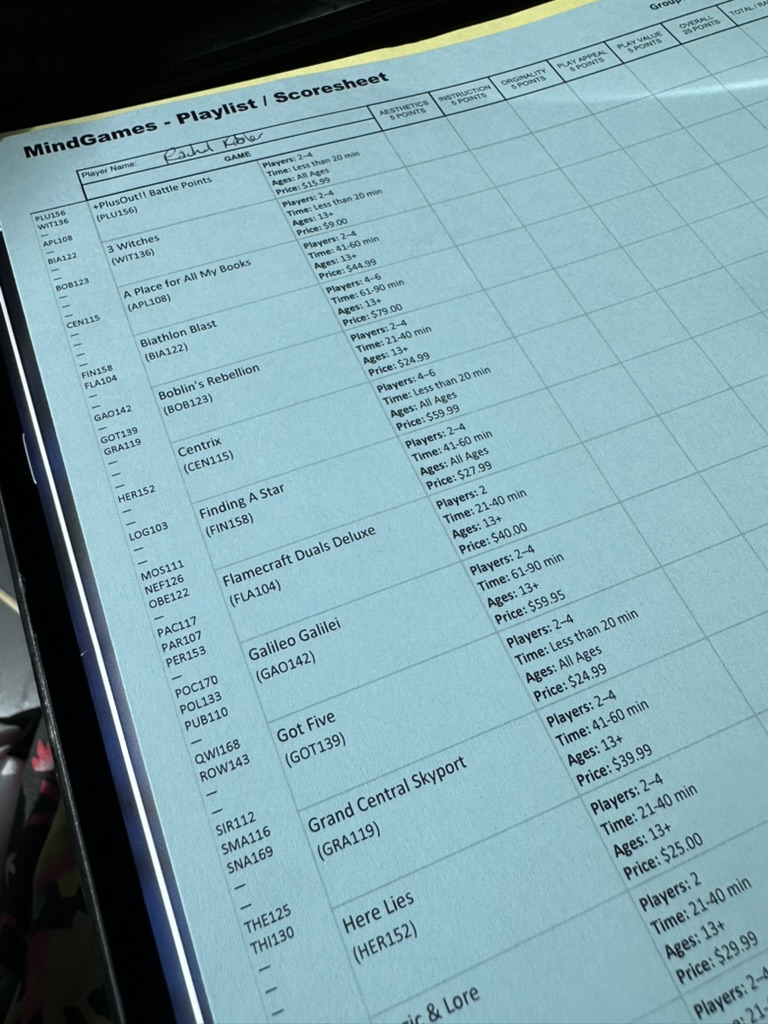
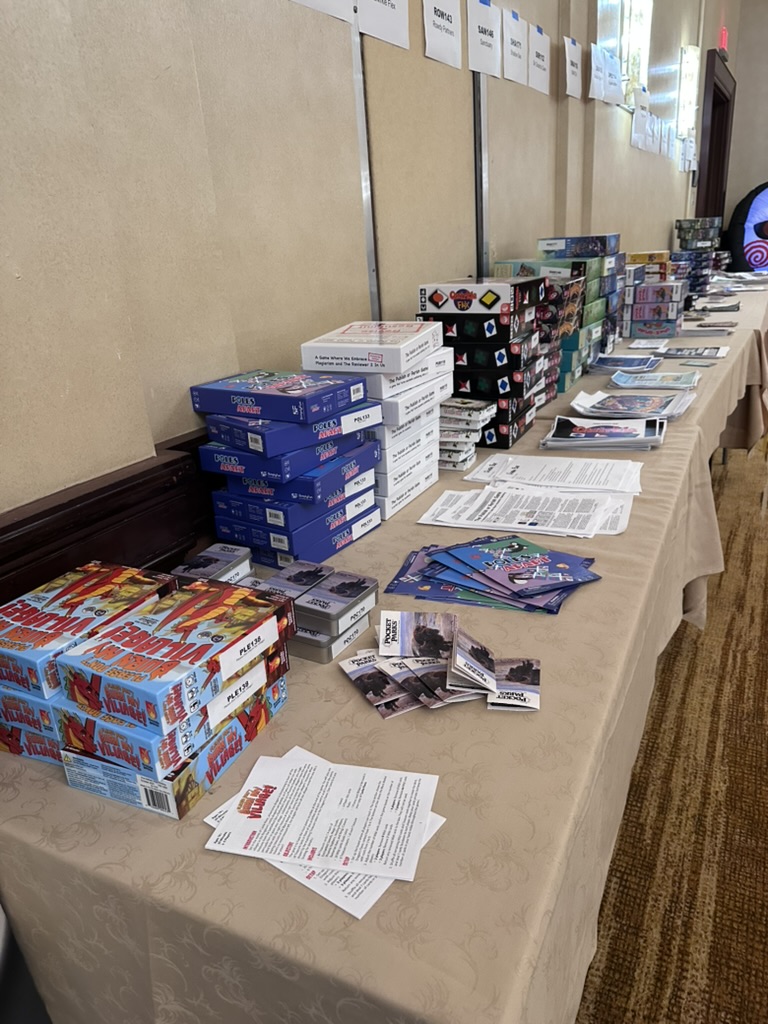
Each game entered into Mind Games should have been released in the last year and a half or have plans to release in the next year. Sometimes there are exceptions though. With each game we play, we rate the game on five things (aesthetics, instructions, originality, play appeal, and play value), as well as how much we liked it. We also give the manufacturer comments about the game, including suggestions for improvement. After we’ve played through the 30 games on our ballot (a subset of the total games, this year there were 65), we rank our top seven games and vote for them. The chief judge tallies up all the 300 ballots to determine the winning seven games (five adult games and two children’s games), which each get to put a seal on their games saying they are “Mensa Select” games. And then the game giveaway begins. The chief judge has a randomized list of all the 300 judges or so, and each person stands to announce the game they want to take home when their name is called. There are at least 5 copies of each game to give away, sometimes many more. At the end of the list, she starts from the bottom and goes back up, so many people end up taking two games home.
The Games
Out of 65 games this year, I played 43 of them (the 30 on my ballot plus a few handfuls of games I wanted to try). The caliber of games this year seemed higher too, and there were many games I wanted to play that I didn’t have time to. It was the year of the rondel! Lots of games had rondel mechanisms, which I love. And tons of 2-player games, which are also great. Here’s a very long rundown of games I enjoyed:
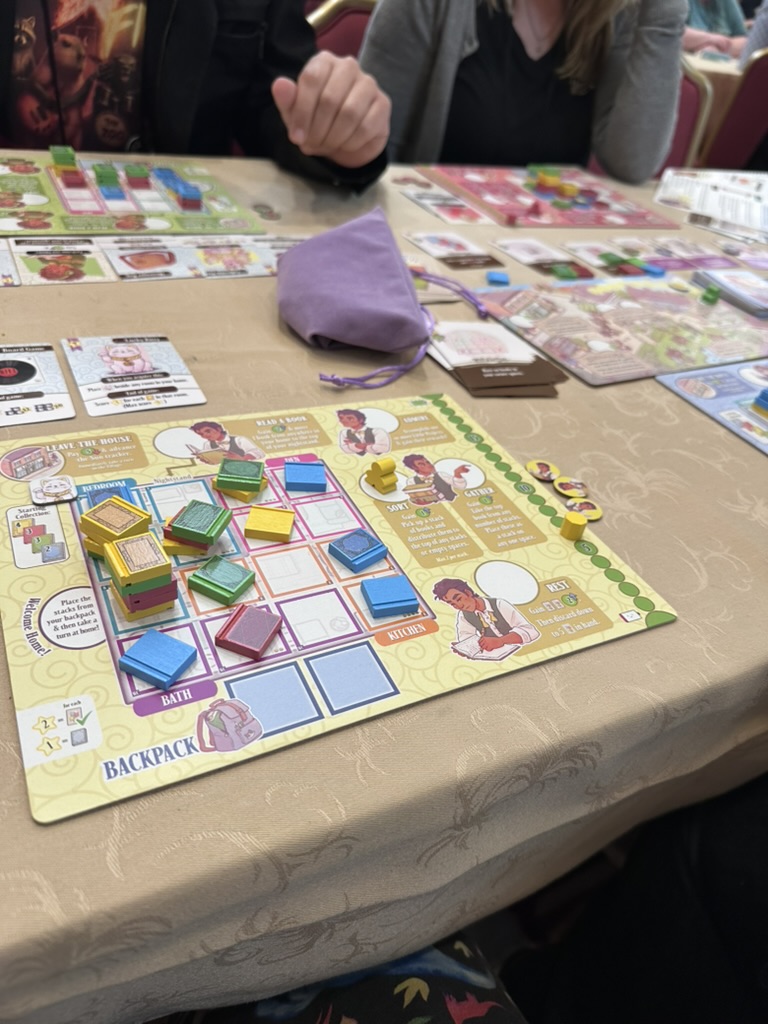
- A Place for All My Books : The theming on this introvert game is exquisite. Players are introverted readers who are trying to create stacks of books in their apartments to gain energy to go into the village (to get more books!). It can be played solo as well as multi-player, and there’s not much interaction with other players, so it’s an introvert’s dream game in addition to the theme. Loved this game.
- Biathlon Blast : I’m not big on racing games, but this was a cute one, and I’m not just saying that because I won, hahaha. We played with five players, which was a good number. Players have different strengths for their biathlon (skiing and shooting) athletes, which give them different advantages for the courses. The shooting phase gives penalties or advantages, and cards are spent for movement. Like I said, it’s cute, but it’s a racing game, and I probably wouldn’t choose to play this one much.
- Boblin’s Rebellion : This is a dungeon-crawler style game, where you spend goblins to convert them into other types of goblins and gain victory points for them. It’s quite a thrilling engine-building game, where the engine is more an engine of Theseus, as each card only has limited uses for generating points (or goblins). It moved pretty quickly and was very fun to play.
- Bomb Busters : This is a cooperative puzzle game that is quite fun. You and the others are trying to defuse bombs where each of you have part of the information and no one has the whole. You cut wires and try to determine where the yellow and red wires are (and avoid cutting those). We played it with two and found it quite delightful though hard.
- Centrix : It’s a good “take that” game, where you are trying to be the first to get both pawns to the top of a circular pyramid and can bump other people’s pawns down by landing on them. It needs a lot of people to play, at least a minimum of three people, the chaos (and the fun) will be a lot greater with more than that.
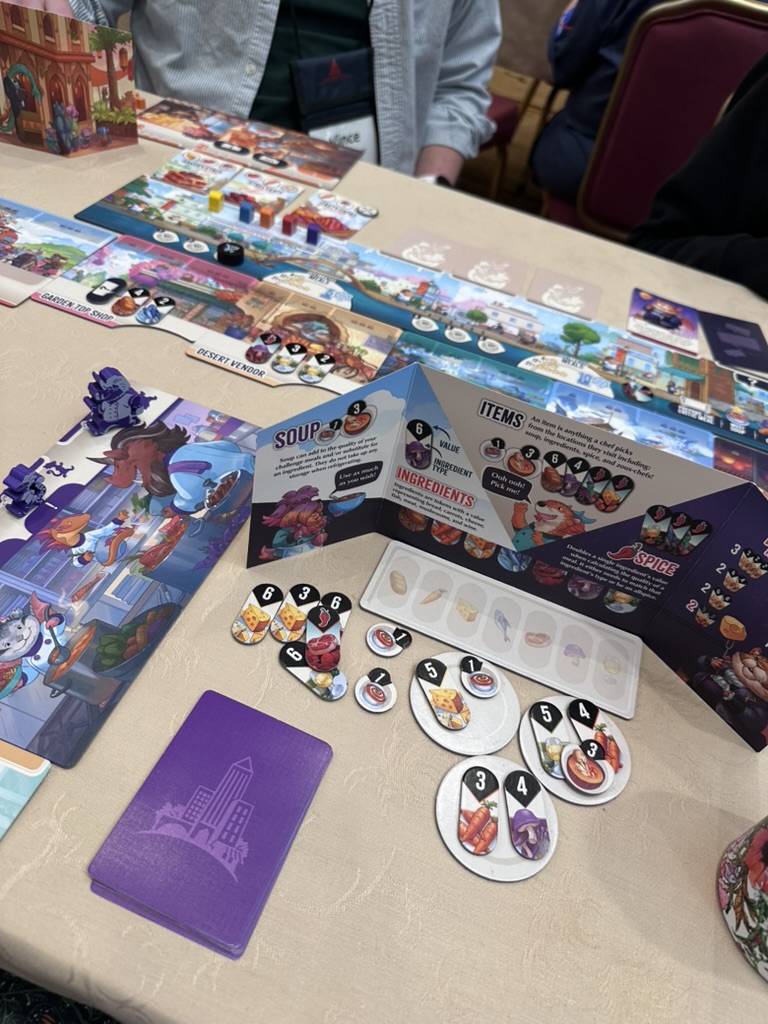
- Critter Kitchen : Players run their own restaurants and are vying for the best ingredients to create the best meals during the game and during one final points-grab at the end. It’s hard to know how you’re doing during the game, because the endgame is so important. But it’s a really cute game with some fun race conditions and just a sweet theme. I do want to own this one at some point.
- Cross Spin : This is a fun party game if you like word games! You’re competing to create crosswords based on clues drawn from a deck of cards. It’s a hoot to play and a challenge to get right.
- Flamecraft Duals Deluxe : I’ve played Flamecraft a few times, and this two-player variant is just lovely. The box becomes the board, and playing dragons on the board triggers their special actions. Players are trying to create patterns from the dragons on the board to gain victory points. It’s a beautiful game and very delightful to play too.
- Fromage : I got to play Fromage when it first came out, and I was delighted to get to play it (twice) at Mind Games again. Players are cheesemakers, and the board rotates between each turn, where play happens simultaneously, so it moves pretty quickly. You have to keep track of what others are doing to a certain extent, but different strategies can win, and a bit of diversification is important. I just love this game so much, both for its theme and its play.
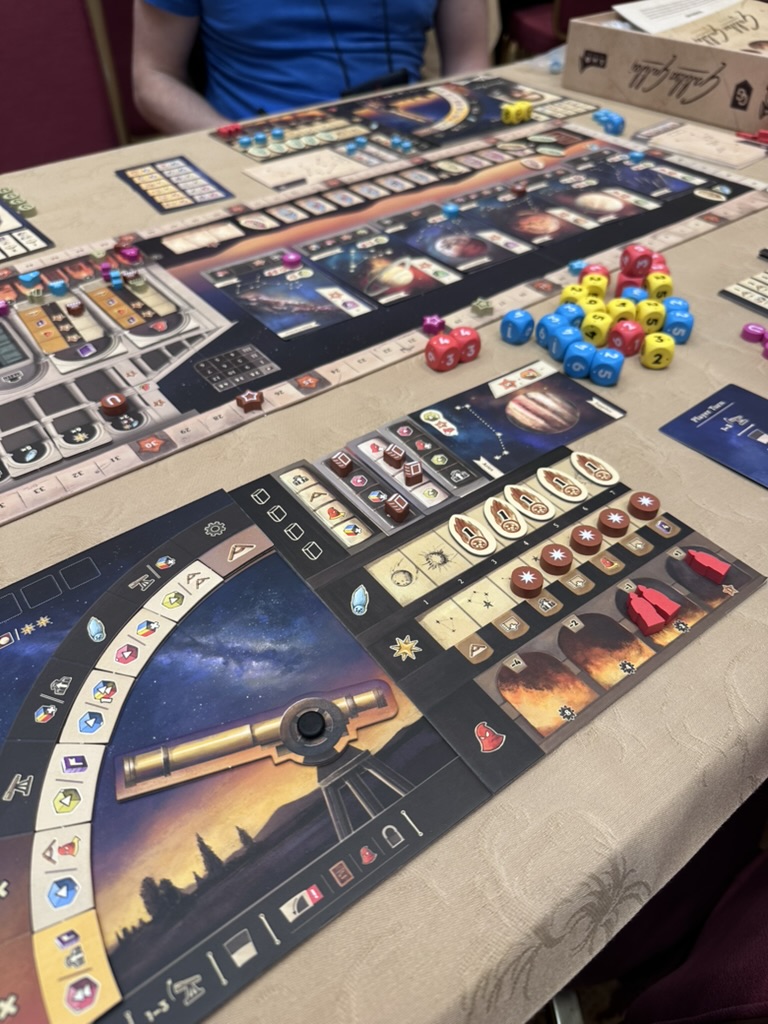
- Galileo Galilei : This was the first game I played, and I deliberately chose to go with a long game to start. I really enjoyed this one, with the way that each move put actions out of commission for the next few times and the inquisitor actions that caused tension and thrill. It’s a solid engine-building game, and it was my top vote from my ballot.
- Got Five : This is a deduction game where you are trying to be the first to figure out what five numbers are in front of you (everyone else can see them, you can see everyone else’s). There are a few options when you take a tile from the center, in that it can be compared to your tiles in different ways. I enjoyed playing it, though there seems to be a bit more luck than I usually go for in the drawing of the initial numbers.
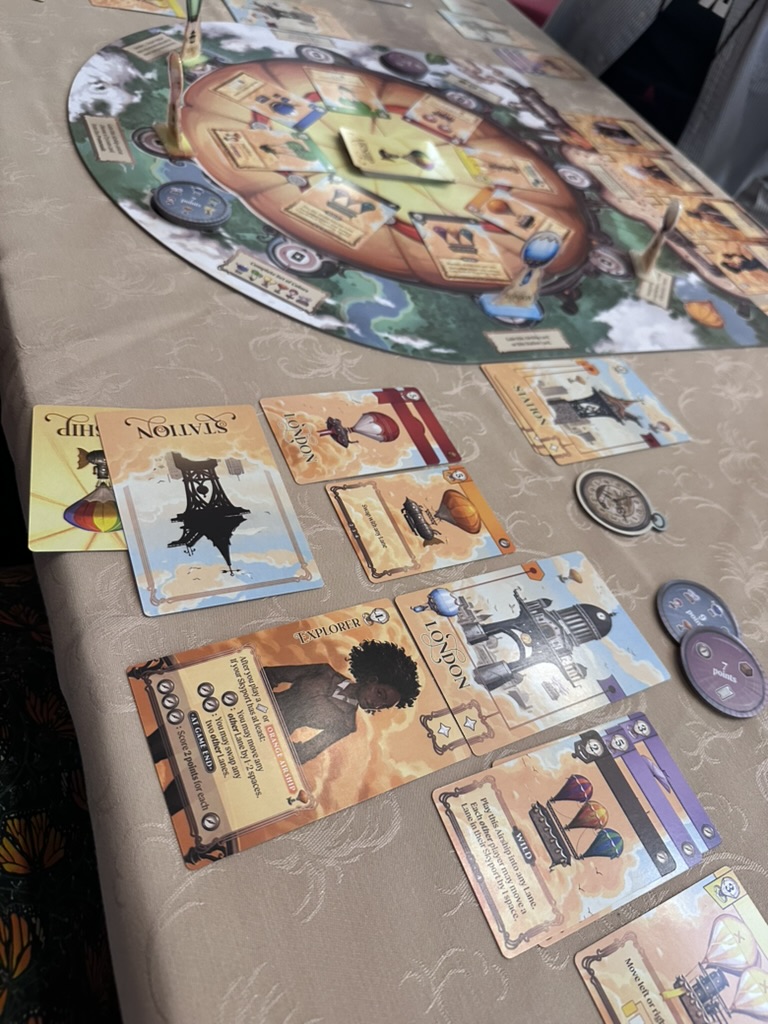
- Grand Central Skyport : This was one of my favorites from the weekend! It’s a nice steampunk theme with hot air balloons and tycoons. It was pretty puzzle-y with a great rondel mechanism. There’s minimal interference with other players, just a race for some victory point tokens, so you’re left to your own devices to maximize the points on your board.
- Gygès : This is a very satisfyingly tactile game for two players. You try to reach the space right in front of your opponent by bouncing off rings between the two of you. There are a few simple rules for movement, but it’s a good abstract game that makes one think about chess a lot.
- Here Lies : This is a one-shot game with a lot of scenarios to play through, but the person who knows it can be the lead for the rest of the group. The table is trying to figure out the answers behind deaths or crimes, and they get clues in very cryptic ways. The table has different characters to play off of, who have different powers, and the lead is trying to help them figure it out. It’s got some Sherlock Holmes in it, and it’s just delightful.
- Mi Cielo : Two players try to get their birds to the other player’s balloon cards through traversing the moving sky. Each move flips a card, which can either create new avenues for movement or prevent it. It’s a good two-player puzzle game that I really enjoyed.
- Obelus : A two-player game with a science fiction bent, players are trying to make it so the other person can no longer move. The game starts out pretty open but then tightens up and brings the endgame more quickly than you anticipate. It can be addictive, which is a good trait in a game!
- Pacts : This is an asymmetrical two-player game that can balance for experience, which is pretty cool. You’re trying to exert control in different areas based on cards that allow you to move cubes around the cloth board. If you’re playing against someone who has played it a lot, you can give them a really hard clan to play as, while you take a clan that is easier to manage. It’s a neat little game.
- Parks (2nd edition) : I hadn’t played the first edition, but my understanding is that the second edition of Parks took all the Kickstarter expansions and also revamped the art and brought them into this edition. I enjoyed it a lot. There was more strategy than I expected, which I liked once I figured it out. I heard complaints about the change in art, but I thought it was lovely as well.
- Person Do Thing : This is a pretty wild party game. Players choose from an easy, medium, or hard deck, which restricts what words they can use when trying to get the table to guess the word on the card. It gets pretty funny pretty quickly, especially with the hard deck, as that comes with a set list of words that applies to all the cards and has no additional clue-specific words to use. It’s really fun to play and quite addicting.
- PocketParks : This is a cute set-creating game with American national parks! Each park card has a bunch of icons on it, and you’re trying to create sets out of those icons and mess with opponents by playing action cards on them. It’s a fun and short game. We inadvertently played it incorrectly for a bit, but we corrected in the end.
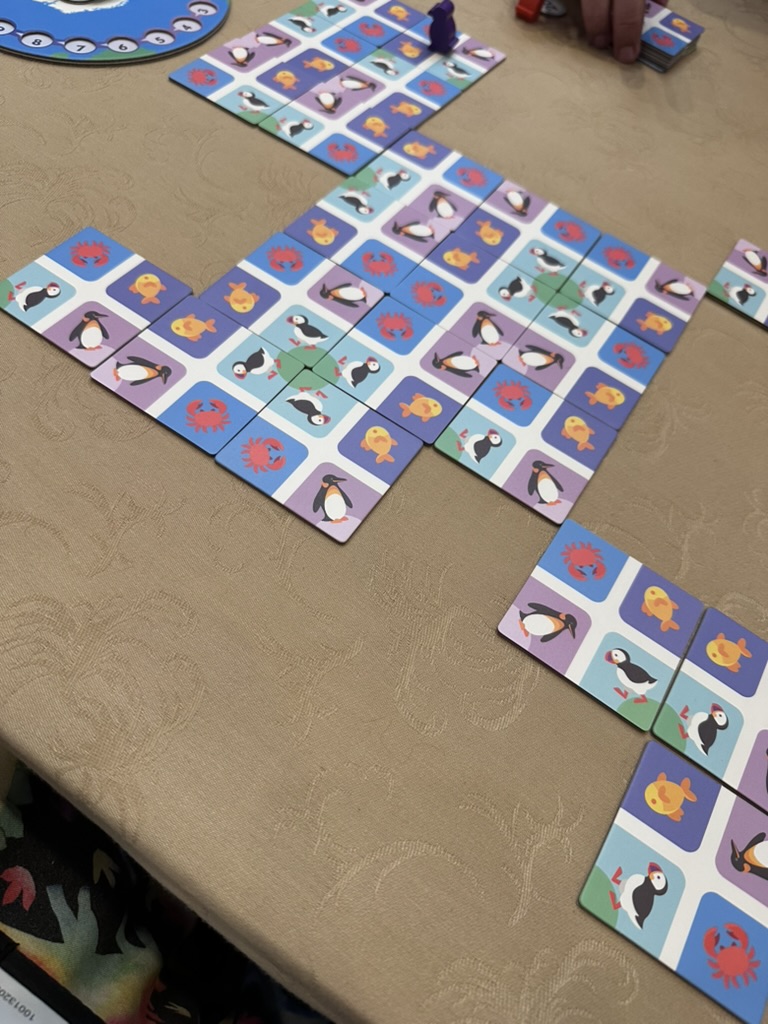
- Poles Apart : I lost this game disastrously and had a lot of fun doing so. Spatial reasoning has always been my weakest logic point, so… yeah. Players take a double-sided tile and place it against other tiles in a way that it will flip and match. You’re trying to keep penguins and puffins apart (as they belong at different poles), and understand how the tile will flip when it does. It’s a fun puzzle, geared towards kids, but goodness me, at 2am, it becomes a pretty intense game for adults too.
- Publish or Perish Game : This is another party game that is well-written and funny. Each of you is trying to publish papers based on cards you have with matching icons for the manifestos. At the end of the game, when you have collected enough manifestos, you give a speech about your body of work and how it all connects to each other. The papers/manifestos have hilarious titles and themes, and it’s quite entertaining to hear people connect their papers at the end.
- Qwirkle Flex : I do love Qwirkle, and I was suspicious of what seemed like a minor update to the game, but I enjoyed this! The backgrounds of the tiles now matter (black or white or split) for diagonal points, which is fun. It’s an extra way to think about Qwirkle with just a small change, and it adds more to the game than I expected it to.
- Sir Ocelot’s Cave : This is a two-player game where you try to make big moves by setting them up over several turns. You’re both trying to take gems and tokens out of caves by being able to “see” them through the locations of tools and your character. It’s a thinky game with less interaction than I expected, except that you’re in the same space. It was delightful to play.
- The Mire : Another two-player game! This one has players trying to trap each other in the muck by preventing the other player from being able to move at the beginning of their turn. It’s a lovely and short game (it can be REALLY short if you start wrong, lol), and it makes a good palate cleanser between heavier games.
- Things in Rings : This game is geared towards kids but can be deceptively hard for adults. You start with a Venn diagram, and one person is trying to help the table figure out the rules for the different circles by placing noun cards in the various rings. It’s a good time!
- Tridecco : Shapes are hard. These Einstein shapes (tridecagons) are asymmetrical but tiling, and you’re trying to get rid of all of yours before anyone else does. It’s a challenging game that I’m not sure we played correctly. It seemed like one person could get a lot of turns in a row by creating hexagons, but then all of us did that, and I was just a bit confused. It was a fun game though!
- Undergrove : This is a longer game with mushrooms! You’re trying to create a forest based on mycelia. It has a helpful start guide for the first four turns, which helps you understand the rules and mechanisms without having to read and retain all the rules in one go. It’s fairly easy to figure out what to do once you get started, and I think it would be a really good game for a long evening.
- Up or Down? : A pseudo-rondel, I’m going to call it, this has numbered cards in a circle, and on your turn, you take a card and add it to a set that either goes up or down in numerical value… like the name suggests. It’s trickier than initially expected, but quick to play and fun to try.
- Wine Cellar : I really enjoyed this auction game with building a wine cellar. Each player tries to create their collection of eight wines in a way that maximizes their points, but wines can’t shift in your cellar once they’ve been placed. It plays anywhere from 2-8 players, though I think 4 is a sweet spot for it, to give some player interaction without being drawn out. Really enjoyable game.
A Place for All My Books
Critter Kitchen
Galileo Galilei
Grand Central Skyport
Poles Apart
The Winners
- A Place for All My Books (Smirk & Dagger Games)
- Critter Kitchen (Cardboard Alchemy)
- Fromage (R2i Games)
- Galileo Galilei (Capstone Games)
- Got Five! (Blue Orange Games)
- Things in Rings (Allplay)
- Twinkle Twinkle (Allplay)
I played all the winners except for Twinkle Twinkle! And really enjoyed them all.
In the giveaway, I brought home The Mire and Wine Cellar, and I’ve really enjoyed playing them since!
I highly recommend getting to Mind Games if you can, it’s just a really great event. I hope to be back next year, when it’s in Cincinnati!